Giran Ozcan argues that it is easy, and wrong, to find simple causes for the recent violence in Syria. Instead, he believes, the anti-Kurdish campaign of 2026 and the violence against other minorities in 2025 are part of Syrian Interim President al-Sharaa’s four point playbook.
The fall of the Bashar al-Assad regime in Syria on December 8, 2024 was a moment of hope for the country and the rest of the Middle East. The Ba’ath Party had ruled brutally for 61 years, inflicting suffering and conflict upon Syrians, and exporting terrorism to the rest of the Middle East and Europe. The final 15 years of the Ba’athist dictatorship were extremely violent with the regime’s decision to meet a peaceful uprising in 2011 with massive repression started a civil war that claimed over 300,000 civilian lives, with thousands dead from mostly regime chemical weapons attacks. Adding to the misery, Syria became a haven for jihadis, in particular the Islamic State in Iraq and Syria (ISIS), which ran a sadistic caliphate in the eastern Syria city of Raqqa from 2014-2017 – and which also used chemical weapons including against Kurdish fighters.
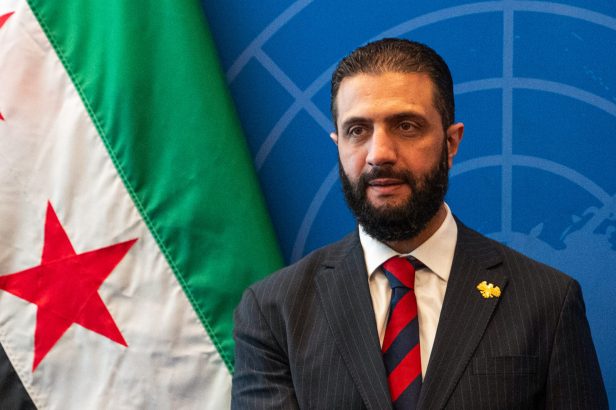
Two main forces emerged from the ruins: the jihadis who defeated Assad and the Kurds who vanquished ISIS. The new Syrian government is a coalition of a variety of Islamists and jihadis dominated by those from the previous Hayat Tahrir al-Sham (Movement for the Liberation of the Levant). The jihadi leader, now the interim president of Syria, is Ahmed al-Sharaa – a former al-Qaeda operative who spent years imprisoned by the Americans in Iraq before returning to Syria, and who defeated Assad with Turkish support. The Kurds have a collective leadership composed of veterans of their struggle across the Middle East. They formed their military, the Syrian Democratic Forces (SDF), in 2015 at U.S. instigation following the ISIS siege of Kobane (2014-2015). The United States did not want to over rely on Kurds in the fight against ISIS, and instead needed an Arab-Kurdish security structure to assuage Turkish concerns. The SDF commander is Mazloum Abdi, a Syrian Kurd.
The world was willing initially to give al-Sharaa and his government the benefit of the doubt after the devastation of the civil war. Countries rapidly lifted economic measures against Syria and the jihadis. The Biden Administration removed the $10 million reward for al-Sharaa’s arrest. President Trump met al-Sharaa in May 2025 in Saudi Arabia, paused most sanctions, and then welcomed the new Syrian leader to the White House in November 2025. By the end of 2025 some 1.2 million Syrian refugees had returned home.
Israel, however, was sceptical of the new Syrian administration because of the jihadis’ publicly-stated hostility to the Jewish state and their record of human rights abuses. Immediately after the fall of the Assad regime, Israel struck a variety of Syrian military assets, including chemical weapons stocks, to prevent them falling into the hands of al-Sharaa and his forces. Israel has taken control of small amounts of territory beyond the Golan Heights to provide a protective buffer to the population of the area.
Rebuilding the Syrian State
The Syrian transitional government, formed in March 2025, has to cope with an economic catastrophe and a violated society. It has announced an interim constitution, which has drawn criticism for how it hands unchecked power to al-Sharaa. The country has a People’s Assembly as of October 2025, which was selected by government-appointed local councils. This parliament, which is not yet fully constituted and is yet to convene, should oversee the introduction of a new charter over the next five years.
In a similar fashion, since June 2025, the Syrian transitional government has held U.S.-brokered meetings with Israel. Syria formally joined the anti-ISIS coalition to defeat remnants of that organisation which still operate in parts of the country. The Syrian transitional government also seemed to acquiesce in U.S., British, and French air attacks on ISIS targets in December 2025 and January 2026.
Familiar Problems
Despite these apparent promising signs, and inevitable transitional issues, Syria’s familiar problems of intolerance and state violence soon resurfaced.
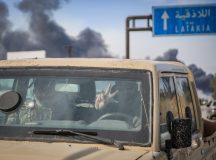
There is a pattern, despite international engagement, of the Syrian transitional government tolerating, and participating in, violence against religious and ethnic minorities. Al-Sharaa’s jihadi base particularly hates the Alawites, a Muslim-adjacent sect that provided part of the base of the Assad regime. There is similar hostility to Christians and the Druze, groups to which the Assad regime seemed to provide a measure of protection. In March and April 2025, jihadis allied to the Syrian transitional government massacred Alawites in the Syrian coastal region of Latakia, claiming around 1,400 lives. The killings of civilians followed residual resistance from Assad loyalists. Interim president al-Sharaa blamed the Assad supporters for the violence, downplaying the role of his supporters. There have since been a series of kidnappings and rapes of Alawite women. In April and July 2025, clashes involving Syrian Druze and Syria Bedouin caused many hundreds of civilian dead, close to 200,000 internally displaced, and resulted in Israeli airstrikes to support the Syrian Druze. Although the massacres have abated, killings of minorities, such as Christians, continue.
The Assault on the Kurds
The most recent example of anti-minority violence was the series of intermittent attacks on the Kurds that started in July 2025 and escalated in December 2025 until the end of January 2026. Although a minority in Syria as a whole – Kurds number around 2.5 million out of a population of 25 million – the Kurds are a majority along much of Syria’s northern and northeastern border. Kurds also dominate some parts of Aleppo, such as the neighbourhoods of Sheikh Maqsood, Ashrafiyeh, and Bani Zaid. The Kurds have long been on the receiving end of discrimination and repression in Syria. The Ba’athist regime stripped many Kurds of their Syrian nationality, removed tens of thousands from their homes, created an “Arab belt” of state-sponsored Arab farming communities to fragment the Kurdish population, banned the Kurdish language, and would not register the birth of children with Kurdish names.
Although al-Sharaa’s administration and the Kurds agreed to integrate the SDF into Syrian military forces in March 2025, progress was slow. In particular, the violence of al-Sharaa’s allies against the Alawites, Christians, and Druze created distrust and fear. It was not surprising that the Kurds were wary of putting themselves in a weak position given the fate of other minorities.
Nonetheless, the Kurds were keen to participate in the goodwill toward the Syrian transitional government, an attitude encouraged by their Western parties. The SDF withdrew from Aleppo in April 2025, leaving behind “asayish” (local security forces). Despite this Kurdish withdrawal, the Syrian administration in July 2025 blockaded Kurdish areas of Aleppo, followed by brief armed clashes in October 2025. Fighting restarted in Aleppo in December 2025, with the Syrian transitional government besieging the Kurdish neighbourhoods. After a ceasefire, fighting restarted in Aleppo, causing the internal displacement of around 148,000 people. The Syrian transitional government then unleashed a larger jihadi offensive in January 2026 against Kurdish northeastern Syria that overran large swathes of territory. The Syrian transitional government besieged the Kurdish city of Kobane, which had resisted an ISIS siege in 2014-2015. Al-Sharaa’s military campaign in January 2026 was the largest use of state violence against the Kurds since the Assad regime suppressed Kurdish demonstrations in 2004.
The Al-Sharaa Playbook
It is easy, and wrong, to find simple causes for the recent violence in Syria. Examples include claiming that al-Shaara is taking orders from Turkey to attack the Kurds, or that the Kurds are being maximalist by seeking to retain the SDF and their self-rule in the north east.
Instead, the anti-Kurdish campaign of 2026 and the violence against other minorities in 2025 are part of al-Sharaa’s four point playbook.
First, al-Sharaa and the Syrian transitional government possess an extreme Islamist mindset. The interim constitution makes Islamic jurisprudence “the principal source of legislation,” meaning that the state will be run on religious principles. The avowedly unitary state ensures that ethnic groups, such as the Kurds, have no right to self-rule. For the extreme Islamists, the Kurds have limited rights as individuals, but none as a people. That means the Syrian transitional government does not respect the Kurds’ desire for a modern administration that acknowledges people’s Muslim faith, but that rules in secular manner. In al-Sharaa’s worldview, religious minorities exist on sufferance. Al-Sharaa’s much heralded, but misunderstood, decree about the Kurds is consistent with this approach. Presidential decree number 13 allows for limited Kurdish language education; recognition of the Kurdish new year (Nowrouz); and the grant, but not restoration, of citizenship to those Kurds who lost it under the Ba’athist regime. These are crumbs, not concessions.
Second, al-Sharaa and the Syrian transitional government are using the theoretical aim of a state monopoly on the means of violence to impose an Islamist agenda. For all the wishful thinking about armed forces integration, the Syrian transitional government relies on a loose coalition of jihadi groups that it can corral but not control. An example of the Islamist agenda is that a sticking point in the integration of the SDF into the ministry of defence has been the Syrian transitional government’s refusal to accept Kurdish women fighters. During the fighting in January 2026, jihadis captured two Kurdish women fighters, and on camera described them as “gifts” to their commander, which means sex slaves. In another case, a jihadi cut the braid off a woman fighter’s head and displayed it as a trophy.
Third, al-Sharaa and the Syrian transitional government use violence against minorities to promote cohesion within the jihadi coalition. The Syrian interim president cannot deport the many thousands of foreign jihadis who helped him defeat Assad, because that would be a betrayal and because their home countries often do not want them back. There were an estimated 40,000 jihadis in 2017, with the largest number from the former Soviet Union, particularly Central Asia. In some cases, such as the Uyghurs, the Syrian transitional government has incorporated them into its armed forces. Al-Shaara cannot crack down on Syrian jihadis, nor suppress the various militias that now operate nominally as state security forces, as these are his main base of support. The only way to keep them in his service is to provide a domestic enemy.
Worse, the Syrian transitional government’s political use of jihadism resembles how the previous Ba’athist regime unsuccessfully manipulated terrorism. The Ba’athist regime was one of the first in the Middle East to partner with the United States against al-Qaeda following the 9/11 terrorist attacks. The Syrian regime then assisted al-Qaeda to fight U.S. forces in Iraq, attacks in which al-Shaara participated. After 2011, those jihadis then turned on the Ba’athist regime. Similarly, the Syrian transitional government in January 2026 allowed jihadis to attack Kurds guarding ISIS prisoners, leading to the escape of these dangerous inmates. It is clear that the United States does not trust the Syrian transitional government with ISIS detainees in the way it could rely on the Kurds, which is why U.S. forces will transfer some 7,000 jihadi prisoners from Syria to Iraq.
Fourth, al-Sharaa and the Syrian transitional government want support from Turkey, but not its orders. Al-Shaara demanded Kurdish withdrawals from “Arab” territory, areas the Kurds captured as part of the anti-ISIS campaign at the request of the United States, the U.K., France, Germany and others. Yet al-Sharaa has failed to end Turkey’s continued occupation of the Syrian Kurdish region around Tel Abyad.
The Syrian transitional government’s approach to Turkey represents a revolution in Syria’s foreign affairs. Until 2024 Syrian leaders were wary of Turkey. They regarded their northern neighbour as the successor to the Ottoman oppressors of the Arabs and as a land grabber that had unjustly acquired the largely Arab Hatay province from the Mandate of Syria in 1939.
Simultaneously, al-Sharaa and the Syrian transitional government are likely rebuilding before a confrontation with Israel. His apparent willingness to talk to Israel is a symptom of his weakness when up against the region’s main military power. There are loud voices in his jihadi coalition who regard Israel as their enemy. Despite U.S. optimism that Syria would join Trump’s Abraham Accords, al-Sharaa has ruled that out (the Syrian Kurds would join if they could). The Syrian administration is particularly keen to prevent the Kurds from developing their own ties to Israel. Recently, Syrian officials falsely claimed that Israel sold out the Kurds during a January 6, 2026 meeting in Paris. In response, Israel clarified that the Kurds were not mentioned at all during the negotiations.
Back to the Old Syria?
The violence in Syria stopped following an agreement on January 30, 2026 between the Syrian transitional government and the Kurds. The vaguely-worded accord means the Kurds will keep four brigades of the SDF, but within the Syrian armed forces, and their autonomous administration will be integrated into the Syrian state.
Although there is much diplomatic self-congratulation, the events of the last year have set back hopes for a new kind of politics in Syria. There could be a return to the past, with security consequences beyond Syria. The retreat of the Syrian Kurds at the hands of government-backed jihadis has damaged the anti-ISIS struggle at the wrong moment. ISIS appears to be reviving with Jews as the main target. In recent months there have been two ISIS-inspired attacks on Jewish targets (Heaton Park in the U.K. and Bondi Beach in Australia). Two ISIS supporters were convicted of a plot against Jewish targets which resembled the Bondi Beach attack. Police in Canada arrested three men in late December 2025 allegedly in connection with similar terrorist plans.
Also concerning is that western support for al-Sharaa and his “unified” Syria impedes the post-9/11 struggle against Islamist extremism and jihadism. The unified, unaccountable Syria that al-Sharaa is building will have the same results in the future as such a state had in the past – repression, corruption, and extremism. U.S. policy after 9/11 was to push for openness and reform in the Middle East. Although Obama and subsequent presidents dropped George W. Bush’s emphasis on democracy, there remained an understanding that Islamist extremism and jihadism constitute threats to the United States and its friends. The alliance with the Kurds was a logical outcome of this policy. All the strands of Kurdish nationalism are hostile to Islamist extremism and jihadism as they deny Kurdish identity. The Syrian Kurds are particularly averse to Islamist extremism as they believe that the most powerful means of economic and social development is the empowerment of women. Any attempt to drop the Kurds as security partners and to rely on the goodwill of jihadis could be a fatal error.